










Scratched Platter & Head Crash Data Recovery
After a head crash, platter surfaces can be scratched. We inspect, clean and image damaged platters to recover as much data as possible.



After a head crash, platter surfaces can be scratched. We inspect, clean and image damaged platters to recover as much data as possible.
A head crash happens when a read/write head touches the spinning platter. The contact can scrape the magnetic coating, leaving circular scratches and loose debris inside the drive. If the drive keeps running, the debris spreads and damages more of the surface and the replacement heads.
The grinding or scraping noise some drives make is often the sound of a crash in progress – switch the drive off immediately.
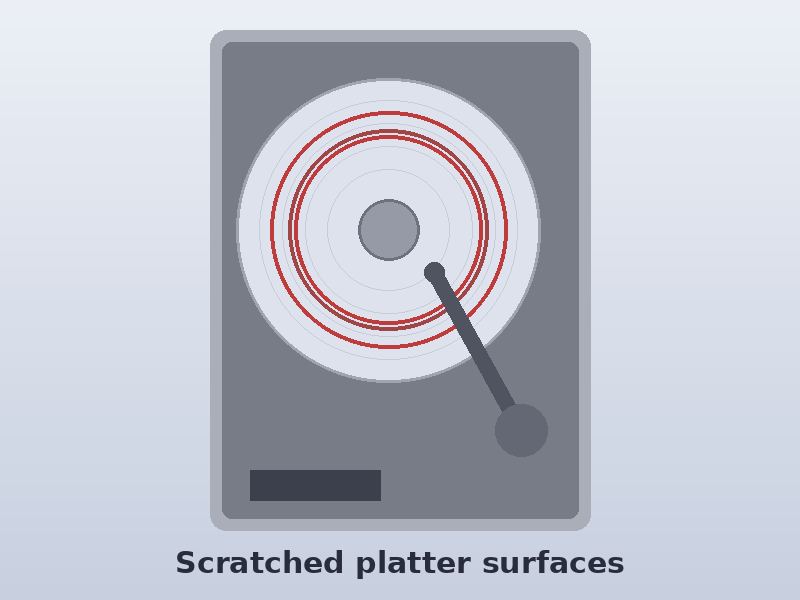
In our clean room we inspect every platter surface under strong light. Loose debris is removed and platters are cleaned with specialist solutions – read our failed hard drive diagnostic guide for more detail. New heads are then fitted and the drive is imaged using head maps and selective reading, so the healthiest areas are copied first and damaged areas last.
Data stored in scratched areas is lost, because the magnetic coating that held it has gone. But scratches often cover a small fraction of the surface, and a careful recovery can save most files – especially photos and documents stored elsewhere on the disk. We report honestly on the likely result after the clean room diagnostic.
Often partly, yes. It depends on how much of the surface is damaged and where your files are stored.
Each power-on spreads debris and deepens scratches, turning a partly recoverable drive into an unrecoverable one.